Indoor Air Quality Standards: Why Clean Air Matters for Your Health
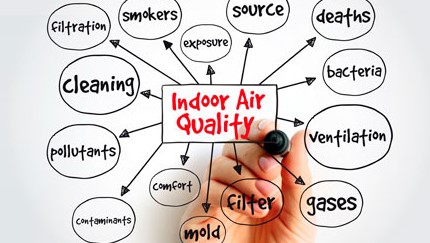
We are all obsessed with what we put into our bodies. We filter our drinking water until it is pristine, obsess over organic grocery labels, and track our daily steps. Yet, we completely ignore the 11,000 liters of air we inhale every single day. Most of that breathing doesn’t happen on a pristine mountaintop; it happens inside our homes, offices, and bedrooms.
Think about that afternoon slump you experience around 3:00 PM. Your eyes burn slightly, your head throbs, and you reach for a third cup of coffee, assuming you are just tired. In reality, you might actually be suffocating in your own sealed living space.
As a health writer with more than a decade of experience tracking environmental health data, I used to focus almost entirely on diet and exercise. That shifted years ago when I began working with occupational hygienists to analyze environmental triggers in corporate offices.
The data we collected shook me. We frequently found spaces that met every building code but completely failed baseline health metrics. That was my wake-up call: true wellness is completely impossible if your respiratory system is constantly fighting its immediate environment. To protect our families, we have to understand the science of Indoor Air Quality Standards.
The Invisible Threat Lurking in Modern Architecture
Modern buildings are structural triumphs of energy efficiency. They are engineered to be tightly sealed boxes that prevent heating or cooling from escaping. While this design is fantastic for your monthly utility bills, it is frequently disastrous for your lungs.
Without proper ventilation, pollutants become trapped inside and rapidly multiply. The air inside your home can easily become two to five times more polluted than the air outside.
The Fish Tank Analogy: Think of your home or apartment exactly like a glass fish tank. If you never change the water or turn on a filtration system, the water quickly becomes cloudy, filled with waste, and toxic to the fish. Our modern, sealed rooms do the exact same thing with air. When we don’t actively ventilate, we are essentially swimming around in stale, stagnant biological waste.
Breaking Down Indoor Air Quality Standards
When environmental scientists and regulatory bodies establish healthy air guidelines, they look closely at a specific cocktail of airborne hazards. To understand if your personal environment is safe, you need to understand the main metrics that define these benchmarks.
[Total Indoor Air Pollution]
   ├── Particulate Matter (PM2.5 & PM10) ──> Fine dust, soot, smoke
   ├── Volatile Organic Compounds (VOCs) ──> Chemical gases from furniture/cleaners
   └── Carbon Dioxide (CO2)                 ──> Stale air from human respiration
1. Particulate Matter ($PM_{2.5}$ and $PM_{10}$)
Particulate matter refers to tiny solid particles or liquid droplets floating in the air. $PM_{10}$ includes larger particles like coarse dust and pollen. The real danger, however, comes from $PM_{2.5}$—fine particles that are less than 2.5 micrometers in diameter.
These particles are so incredibly small that your nasal passages cannot filter them out. They travel deep into your lungs, bypass your respiratory defenses, and enter your bloodstream directly, triggering systemic inflammation. According to global health guidelines, average annual exposure to $PM_{2.5}$ should ideally stay below $5 \ \mu\text{g/m}^3$ (micrograms per cubic meter) to protect long-term cardiovascular and lung health.
2. Volatile Organic Compounds (VOCs)
Have you ever purchased a new couch, unrolled a brand-new carpet, or opened a fresh can of paint? That distinct, chemical aroma isn’t just a “new smell”—it is a phenomenon known as off-gassing.
Volatile Organic Compounds (VOCs) are chemical gases emitted by everyday household items, including paints, varnishes, synthetic fabrics, and conventional cleaning sprays. Common VOCs like formaldehyde and benzene can irritate your throat, cause chronic headaches, and damage your liver over extended periods. Healthy standards dictate keeping total VOC levels well under $300 \ \mu\text{g/m}^3$.
3. Carbon Dioxide ($CO_2$) Levels
We exhale carbon dioxide naturally. In an outdoor environment, $CO_2$ dilutes safely into the atmosphere at around 400 to 420 ppm (parts per million).
In a closed bedroom with two adults sleeping with the door shut, $CO_2$ levels can easily skyrocket past 2,000 ppm by morning. At these elevated concentrations, your cognitive performance plummets. You wake up feeling groggy, experience brain fog, and lose the ability to focus efficiently.
Common Health Consequences of Stagnant Spaces
When an indoor environment consistently fails basic safety benchmarks, your body will eventually pay the price. Environmental physicians classify these issues into two distinct categories:
-
Sick Building Syndrome (SBS): This occurs when occupants experience acute health issues—such as throat irritation, dry skin, fatigue, and dizziness—that appear only while spending time in a specific building and disappear completely once they leave the premises.
-
Building-Related Illness (BRI): This represents more severe, diagnosable illnesses directly caused by indoor airborne pathogens or toxins, such as Legionnaires’ disease or chronic asthma induced by hidden toxic mold growth.
Pro-Tips for Optimizing Your Personal Airspace
Over my years spent auditing spaces alongside air-quality professionals, I have gathered practical, high-impact strategies that can immediately lower your indoor pollutant load without requiring expensive HVAC overhauls.
1. Execute the Daily Purge
Open your windows for just 10 to 15 minutes twice a day, regardless of the season. This simple act flushes out accumulated $CO_2$ and built-up chemical gases, completely resetting your indoor atmosphere. For the best results, open windows on opposite sides of your home to create a powerful cross-breeze.
2. Deploy True HEPA Filtration
If you purchase an air purifier, make sure it utilizes a certified True HEPA filter. True HEPA filters are mechanically rated to trap $99.97\%$ of airborne particles as small as 0.3 micrometers.
Avoid purifiers that use vague marketing terms like “HEPA-type” or “HEPA-like,” as these lack the structural density required to capture dangerous $PM_{2.5}$ particles. Additionally, ensure the unit features an activated carbon stage to absorb harmful VOCs and household odors.
3. Track with an Indoor Air Quality Monitor
You cannot manage what you do not measure. Investing in a consumer-grade indoor air quality monitor is an absolute game-changer. Look for a device that provides real-time readouts for $PM_{2.5}$, Total VOCs (TVOC), temperature, and $CO_2$. Seeing the numbers spike while you cook or use cleaning sprays gives you the exact data you need to adjust your ventilation habits.
The Toxic Scent Trap
Many people try to fix stale indoor air by masking it with synthetic fragrances, such as plug-in air fresheners, aerosol sprays, or scented paraffin candles. This is a dangerous mistake. These products do not clean your air; instead, they flood your space with synthetic phthalates and VOCs. You are essentially adding a layer of chemical pollution on top of stale air. If you want your home to smell clean, focus on removing the pollution source and increasing fresh air flow rather than adding artificial scents.
Transforming Your Space for Long-Term Vitality
Achieving optimal health is a puzzle with many interconnected pieces. While we cannot always control the environmental pollution present in our wider cities, we maintain immense control over the micro-environments inside our own front doors.
By aligning your home with established safety standards—minimizing synthetic chemicals, keeping humidity balanced between $30\%$ and $50\%$ to prevent mold, and ensuring a steady flow of fresh oxygen—you create a true health sanctuary. Your lungs will work less, your sleep quality will improve, and your daytime energy will return. Clean air isn’t a luxury; it is the absolute foundation of healthy living.
How do you keep the air in your home fresh? Do you regularly open your windows, or do you rely on a high-tech filtration system? Let’s talk about your indoor environment in the comments section below!