Yoga for Beginners: How to Start Your Journey to Flexibility and Strength
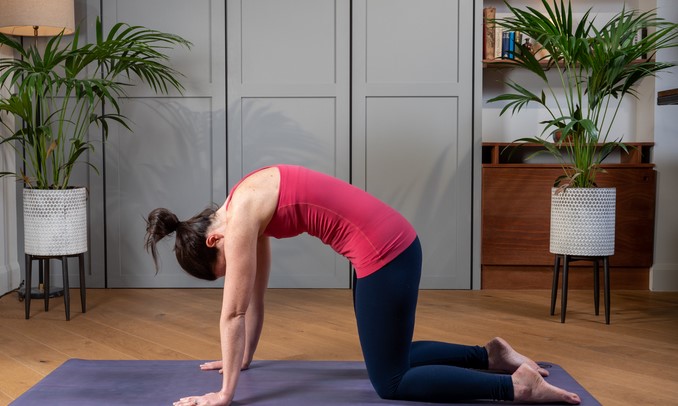
You walk into a dimly lit studio, your brand-new mat rolled tightly under your arm. Your lower back has been aching from long hours at your desk, and your stress levels are through the roof. But as you look around the room, your confidence suddenly evaporates. The person to your left is casually folding themselves into a human pretzel, while the person to your right is effortlessly balancing on their forearms.
Your brain instantly panics: “I can’t even touch my toes without bending my knees. I don’t belong here.”
If you have ever felt this wave of intimidation, you are not alone. As a health writer who has spent more than a decade working alongside sports physiotherapists and yoga instructors, I have watched countless newcomers walk into their first session with that exact expression of sheer panic.
In my early twenties, I fell into the same trap, treating physical fitness like a battleground where only the naturally flexible survived. But years of analyzing biomechanics and observing thousands of students have taught me a profound truth: yoga is not about how deep you can bend. It is about learning how to use your breath to safely build a stable, resilient body. Let’s strip away the social media filters and look at how a structured approach to yoga for beginners can systematically transform your physical and mental health.
The True Anatomy of Flexibility and Strength
Many people view yoga as a series of gentle, passive stretches. In reality, a proper practice is a highly sophisticated system of isometric contractions and eccentric loading. When you hold a posture, your muscles are not just relaxing; they are working together to stabilize your entire skeletal frame.
The Rubber Band and Tree Branch Analogy: Think of your body like a complex structure made of tight rubber bands (your muscles) wrapped around stiff tree branches (your bones). If you violently yank a cold, tight rubber band, it will snap or fray. But if you warm it up gradually and apply steady, controlled tension, it elongates safely. Yoga uses your own body weight to warm up those muscular “rubber bands,” while simultaneously building the structural strength of the “tree branches” supporting them.
[Cold, Tight Muscle] ──> Sudden Force ──> Micro-tears / Injury
[Warm, Active Muscle] ──> Controlled Breath + Posture ──> Safe Elongation & Structural Strength
By practicing regularly, you actively stimulate your nervous system to override the stretch reflex—the body’s natural defense mechanism that causes muscles to contract when they are extended too far. Over time, your brain recognizes that these new ranges of motion are entirely safe, unlocking authentic flexibility and functional strength.
Essential Foundations: Core Poses Every Beginner Should Master
When stepping onto the mat for the first time, you do not need to memorize hundreds of Sanskrit terms. Instead, focus your energy on mastering a few fundamental postures (asanas) that serve as the building blocks for almost every sequence.
1. Downward-Facing Dog (Adho Mukha Svanasana)
This is the ultimate transitional posture, functioning as both an active inversion and a full-body stretch. It targets your hamstrings, calves, and shoulders while decompressing the spine.
-
Form Check: Press firmly through your entire hand, prioritizing a straight, long spine over perfectly straight legs. It is entirely okay—and often recommended for beginners—to keep your heels lifted off the ground and your knees slightly bent.
2. Warrior II (Virabhadrasana II)
This powerful standing posture builds immense isometric strength in your quadriceps, glutes, and shoulders while opening up tight hip flexors.
-
Form Check: Ensure your front knee is stacked directly over your ankle and does not cave inward. Keep your core engaged and your gaze focused over your front hand to maintain structural alignment.
3. Child’s Pose (Balasana)
This is your designated safe harbor. Child’s pose is a restorative posture designed to calm the central nervous system, stretch the lower back, and give your body a moment to reset.
-
Form Check: Separate your knees wide apart, bring your big toes to touch, and let your hips sink back toward your heels while resting your forehead gently on the mat.
The Secret Weapon: Harnessing the Power of Pranyama
You can perform the most aesthetically perfect physical posture in the world, but if you are holding your breath or taking shallow, anxious gasps, you are not actually practicing yoga; you are just straining your body. The physical practice is designed to be completely synchronized with Pranayama (controlled breathwork).
Deep, Slow Diaphragmatic Breathing ──> Stimulates Vagus Nerve ──> Lowers Cortisol (Stress) ──> Muscles Relax Safely
When embarking on your journey into yoga for beginners, start with simple Ujjayi breathing (often called ocean breath). Inhale deeply through your nose, and exhale slowly through your nose while slightly constricting the back of your throat. This technique creates a soothing, audible sound and serves two critical technical functions:
-
It acts as an internal pacemaker, keeping your heart rate stable during challenging holds.
-
It sends a direct signal to your parasympathetic nervous system, lowering cortisol levels and allowing your muscles to release tension safely.
Pro-Tips for a Pain-Free Practice
Over my decade in the health industry, I have seen many enthusiastic beginners accidentally sideline themselves with preventable strains. Here is my practical advice to ensure your practice remains safe and deeply rewarding:
-
Modify with Props Unapologetically: Yoga blocks, straps, and blankets are not signs of weakness; they are tools of intelligence. If you cannot reach the floor in a forward fold, place two wooden or foam blocks under your hands. Bringing the floor closer to you prevents your lower back from dangerously rounding.
-
Differentiate “Good” Discomfort from “Bad” Pain: You should expect to feel an intense, warm stretch or a deep muscular burn during a session. However, if you ever experience a sharp, shooting, or pinching sensation—especially around your knee, elbow, or shoulder joints—back out of the posture immediately.
-
Invest in a Non-Slip Mat: Slipping around during a pose ruins your alignment and forces your muscles to grip out of panic. Look for a high-quality polyurethane or natural rubber mat that offers excellent traction, even when your hands get sweaty.
Beware the “Instagram Ego” Trap
The biggest hidden danger for a beginner isn’t a complex pose; it is your own ego. Trying to force your body into an advanced shape before your ligaments and connective tissues have adapted is a surefire recipe for a hamstring attachment tear or lumbar strain. Your practice is an individual blueprint, not a competitive sport. Honor the unique structural limits of your skeleton every single day.
Choosing the Right Style for Your Goals
Yoga is a beautifully diverse discipline, and finding the right style is essential for staying consistent. Depending on what your body needs, look for these specific classes on your local studio’s schedule:
-
Hatha Yoga: Perfect for complete beginners. It focuses on slower-paced movements, giving you ample time to learn proper alignment cues and hold each pose for several breaths.
-
Vinyasa / Flow: A dynamic style where movements are fluidly synchronized directly with your breathing pattern. This is excellent if you are looking to build cardiovascular endurance alongside muscular strength.
-
Yin Yoga: A deeply passive, meditative practice where floor-based stretches are held for $3$ to $5$ minutes. It targets the deep connective tissues and fascia, making it highly effective for improving long-term joint mobility.
Stepping Onto the Mat with Purpose
Starting your yoga journey can feel intimidating, but remember that every advanced practitioner you see was once a stiff, nervous beginner struggling to find their balance.
By committing to just 15 to 20 minutes of mindful movement a day, you will quickly notice profound shifts in your physical well-being. Your posture will improve, your chronic daily aches will begin to dissipate, and you will cultivate a profound sense of mental clarity that extends far beyond the edges of your mat. Flexibility and strength are not prerequisites for yoga; they are the beautiful rewards that naturally follow your decision to simply show up.
Are you ready to take your first steps on the mat? If you have already started, which pose has been the most challenging or rewarding for you so far? Let’s share our experiences and support each other in the comments section below!