Relaxation Techniques for Sleep: How to Calm Your Mind Before Bed
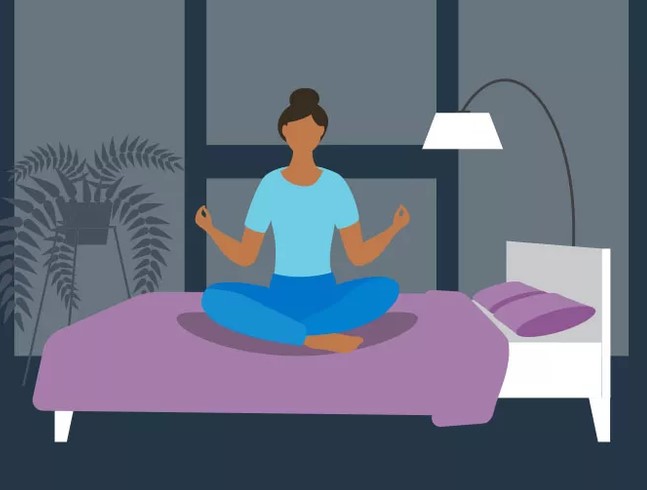
You fluff your pillow for the fourth time. You turn to the left, then the right, and finally stare blankly at the ceiling while the glowing numbers on your alarm clock mock you: 2:14 AM. Mechanically, your brain goes into overdrive, cataloging every awkward conversation you had three years ago, recalculating tomorrow’s budget, and calculating exactly how many hours of sleep you will get if you fall asleep right now.
If this nightly mental marathon sounds familiar, you are running alongside millions of others wrestling with sleep-onset insomnia.
Over my ten years as a health writer working closely with sleep scientists and clinical psychologists, I have reviewed countless sleep journals. The most profound, non-textbook insight I’ve gathered is that most people approach sleep completely wrong. They treat sleep like an on-off switch—expecting their brain to instantly plunge into deep rest after a chaotic 16-hour day.
But your neurology doesn’t work that way. True restorative sleep requires a physiological runway, and mastering targeted relaxation techniques for sleep is how you build it.
The Nervous System Seesaw: Sympathetic vs. Parasympathetic
To understand why your mind races when your body is exhausted, we have to look at your autonomic nervous system. Your body operates on a continuous physiological seesaw governed by two opposing forces.
The Accelerator and Brake Analogy
Think of your nervous system as a high-performance vehicle. Throughout the day, as you answer emails, fight traffic, and drink caffeine, your foot is pressed firmly down on the gas pedal. This triggers your sympathetic nervous system, filling your body with cortisol and adrenaline to keep you alert.
Trying to sleep without winding down is like throwing a car moving at 80 mph directly into park.
To fall asleep, you must actively take your foot off the gas and step on the brake pedal. This activates your parasympathetic nervous system (the “rest and digest” mode), which slows your heart rate, drops your core body temperature, and signals the brain to release melatonin.
Evidence-Based Relaxation Techniques for Sleep
Through a decade of documenting clinical sleep transformations, I have found that the most effective routines utilize specific somatic and cognitive exercises to force the body into a parasympathetic state.
1. The 4-7-8 Breathing Method (The Natural Tranquilizer)
Developed by integrative medicine pioneers, this breathing sequence works by structurally altering your blood-oxygen balance and stimulating the vagus nerve, the main highway of your parasympathetic system.
-
How to do it: Inhale quietly through your nose for 4 seconds, hold your breath entirely for 7 seconds, and exhale completely through your mouth making a “whoosh” sound for 8 seconds. Repeat this cycle for four rounds.
-
The Science: The prolonged exhalation forces your heart rate to slow down, mimicking the exact respiratory pattern of a deeply sleeping human.
2. Progressive Muscle Relaxation (PMR)
When your mind is anxious, your muscles unconsciously tense up, sending emergency feedback loops back to your brain. PMR breaks this cycle by systematically isolating muscle groups.
-
How to do it: Starting at your toes, squeeze the muscles as hard as you can for 5 seconds, then consciously release them entirely for 10 seconds. Move up your body—through your calves, thighs, stomach, hands, shoulders, and jaw.
-
The Science: This somatic release lowers somatic tension and drops peripheral blood pressure, clearing the physical pathway for deep, slow-wave sleep.
3. Cognitive Shuffling (Silencing the Racing Brain)
If you suffer from cognitive hyperarousal—where your brain simply refuses to shut up—traditional meditation can sometimes feel frustrating. Cognitive shuffling forces your brain to mimic the early stages of dreaming.
-
How to do it: Think of a random word, like “BEDTIME.” Take the first letter, B, and think of as many words starting with B as possible (Banana, Butter, Bicycle) until you run out. Then move to E, and so on.
-
The Science: By bombarding your brain with nonsensical, non-threatening imagery, you scramble the analytical thoughts that are keeping your amygdala on high alert.
The Ultimate Pre-Bed Biological Runway
| Time Before Bed | Recommended Action | Neurological Purpose |
| 90 Minutes | Turn off bright overhead lights; activate blue-light filters | Initiates the natural synthesis of melatonin in the pineal gland |
| 60 Minutes | Disconnect from work emails and intense digital media | Decreases cognitive hyperarousal and drops baseline cortisol |
| 20 Minutes | Practice the 4-7-8 method or Progressive Muscle Relaxation | Actively stimulates the vagus nerve and lowers heart rate variability |
| 0 Minutes | Keep bedroom entirely dark and cool (around 65°F / 18°C) | Supports the natural drop in core body temperature required for sleep |
Expert Advice for Transforming Your Nights
💡 Pro Tip: The Danger of the “Try Harder” Trap
Throughout my career, the absolute biggest mistake I see intermediates make is lying in bed for hours trying to force themselves to relax. If you are still awake after 20 minutes, get out of bed. Lying there anxious creates a negative classical conditioning loop, teaching your brain that your mattress is a place of frustration. Go to a dimly lit room, practice a quiet cognitive shuffle or read a boring book, and return to bed only when your eyelids feel genuinely heavy.
Reclaiming Your Right to Rest
Implementing daily relaxation techniques for sleep isn’t about finding a magical cure that guarantees an instant eight hours tonight. It is about a consistent, respectful process of training your nervous system to safely step away from the demands of the modern world.
By prioritizing your pre-bed wind-down, mastering your breath, and clearing out cognitive clutter, you transform your bedroom from a stressful biological battleground into a peaceful sanctuary of deep, rejuvenating recovery.
Which of these relaxation methods are you going to test out tonight—the 4-7-8 breath or the cognitive shuffle? Let’s build an accountability community together; share your current bedtime habits or drop your sleep questions in the comments below!