BMI as Health Indicator: What Your BMI Says About Your Health
 You step onto the cold metal scale at your annual checkup. You watch the numbers settle, and a few moments later, the nurse types your height and weight into a computer. With a quick tap of the keyboard, a double-digit number flashes on the screen, instantly labeling you: Underweight, Normal, Overweight, or Obese.
For millions of people, that single number carries enough emotional weight to ruin an entire week. It dictates insurance premiums, shapes medical advice, and fuels endless fitness anxiety.
Over my ten years as a health writer, working alongside metabolic specialists and clinical lipidologists, I have reviewed thousands of patient charts. I have seen elite, heavily muscled athletes classified as “obese” and metabolically unhealthy individuals with severe visceral fat accumulation skating by with a perfect “normal” score.
My biggest takeaway from a decade in the wellness trenches is this: using BMI as health indicator is incredibly useful for population statistics, but relying on it blindly as an individual health roadmap is a major mistake. If you want to understand what your body is actually trying to tell you, we need to unpack exactly what this mathematical formula can—and absolutely cannot—say about your health.
The Math Behind the Metric: What is BMI?
Body Mass Index, or BMI, is a surprisingly simple mathematical calculation. Developed nearly two centuries ago by a Belgian statistician named Lambert Adolphe Quetelet, the formula is designed to estimate whether a person carries an appropriate amount of body mass relative to their height.
The formula itself is straightforward:
The Moving Boxes Analogy
To understand why this formula can cause confusion, let’s use a simple analogy.
Imagine you have two identical cardboard moving boxes of the exact same size and dimensions. If you lift the first box, it weighs 10 pounds because it is packed entirely with lightweight bubble wrap. If you lift the second box, it weighs 50 pounds because it is packed tightly with dense iron weights.
BMI only measures the total weight of the box. It has absolutely no idea whether that weight comes from fat or muscle.
Because muscle tissue is roughly 18% denser than adipose tissue (fat), a highly active individual can easily weigh the same as someone with a high body fat percentage, causing their BMI score to skyrocket despite peak physical fitness.
Decoding the Spectrum: The Standard BMI Categories
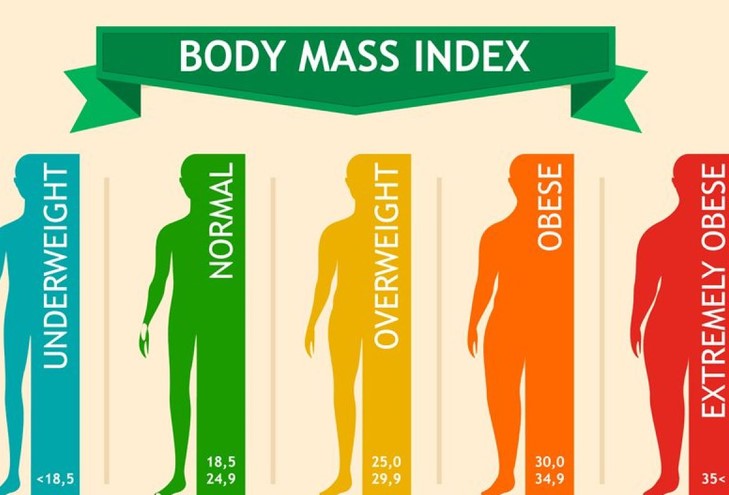
Despite its limitations, medical organizations across the globe continue to rely on BMI as health indicator because it provides a rapid, non-invasive baseline screening tool. The World Health Organization (WHO) breaks the metric down into four distinct primary zones:
-
Underweight (Below 18.5): This zone can indicate potential nutritional deficiencies, a compromised immune system, or underlying bone density risks.
-
Normal Weight (18.5 – 24.9): Statistically associated with the lowest baseline risk for chronic cardiovascular and metabolic diseases.
-
Overweight (25.0 – 29.9): Serves as an early yellow light, indicating a potential increase in structural stress on joints and the cardiovascular system.
-
Obese (30.0 and Above): Strongly correlated with an elevated risk for type 2 diabetes, hypertension, and systemic chronic inflammation.
The Blind Spots: Why BMI Doesn’t Tell the Whole Story
While a high BMI score often correlates with increased health risks across a massive population study, it frequently fails when applied to the nuances of an individual human body.
1. The “Skinny Fat” Phenomenon (TOFI)
The medical community uses the acronym TOFI, which stands for Thin on the Outside, Fat on the Inside. These individuals possess a perfectly normal BMI score, yet their internal biology tells a completely different story.
Because they have low muscle mass combined with a high percentage of visceral fat—the dangerous type of fat that wraps around internal organs like the liver and pancreas—they suffer from high blood pressure, insulin resistance, and elevated systemic inflammation completely unnoticed by the scale.
2. Ethnic and Demographic Discrepancies
The standard BMI brackets were created using data almost exclusively from historical European populations. Modern metabolic research proves that different ethnicities experience health risks at wildly different BMI thresholds.
For example, individuals of South Asian descent possess a higher genetic predisposition to accumulating visceral fat at lower body weights, meaning their risk for type 2 diabetes escalates significantly at a BMI of just 23, well within the traditional “normal” range.
Going Beyond the Scale: Advanced Metabolic Markers
When analyzing health outcomes, an experienced practitioner looks past the single BMI score and aggregates a panel of more accurate, dynamic biomarkers to assess true metabolic health.
| Health Biomarker | What It Measures | Ideal Target Range |
| Waist-to-Hip Ratio (WHR) | Distributes fat storage patterns; assesses visceral fat accumulation | Less than 0.90 (Men) / Less than 0.85 (Women) |
| HbA1c | Your average blood sugar control over the past 3 months | Below 5.7% |
| Triglyceride-to-HDL Ratio | A powerful predictor of cardiovascular plaque buildup and insulin resistance | Less than 2.0 |
| Resting Blood Pressure | The force exerted by blood against arterial walls | Below 120/80 mmHg |
Expert Advice for Your Wellness Journey
⚠️ The Danger of the Weight Loss Trap
Throughout my decade in the health industry, the most toxic mistake I see intermediate fitness enthusiasts make is restricting calories drastically just to push their BMI down. If you lose 10 pounds through extreme starvation dieting, a massive portion of that lost weight comes directly from skeletal muscle tissue. This drops your basal metabolic rate (BMR), rendering your body less efficient at burning energy and ultimately setting you up for a rebound of pure fat gain later on. Focus on body composition, not just weight loss.
Looking Past the Mathematical Shadow
Using BMI as health indicator is a decent starting point for a conversation about your health, but it should never be the final word. Your body is a complex, living ecosystem that cannot be fully distilled into a two-hundred-year-old height-to-weight ratio.
Instead of obsessing over getting your BMI into a perfect mathematical box, redirect your valuable focus toward building functional muscle mass, eating anti-inflammatory whole foods, managing psychological stress, and tracking your metabolic blood panels. True vitality is measured by how your body performs and feels, not by a number on a bathroom floor.
What has your personal relationship with the BMI scale been like? Have you ever felt that it failed to accurately reflect your actual fitness or health levels? Let’s open up an honest discussion—share your thoughts, questions, or experiences in the comments below!