Emergency Care: What to Do in a Life-Threatening Situation
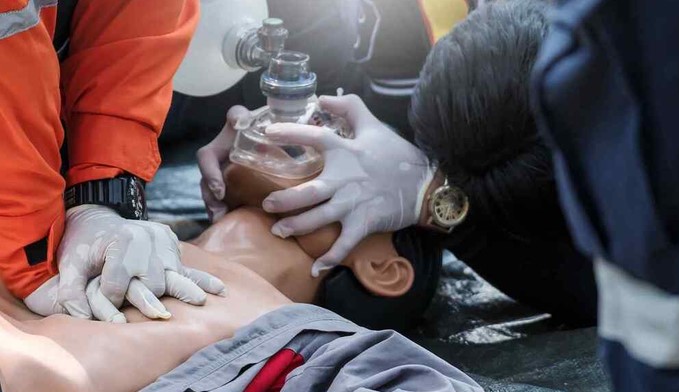
You are sitting at a lively family dinner when suddenly, your uncle stops speaking. He clutches his chest, his face turning an asymmetric, ghostly shade of gray, before slumping forward onto the table. In a split second, the joyful room shatters into pure panic. Someone screams, someone else freezes entirely, and everyone looks around frantically, hoping a doctor magically appears in the crowd.
In a life-threatening crisis, the difference between a tragic outcome and a saved life often comes down to what happens in the first five minutes—long before the flashing lights of an ambulance arrive.
Over my ten years as a health writer, working alongside emergency medical technicians (EMTs) and ER physicians, I have spent hours analyzing crisis response data. I’ve interviewed first responders who told me the same heartbreaking truth over and over: the biggest obstacle to saving a life isn’t the severity of the injury; it’s the bystander effect—the psychological paralysis that stops people from taking action.
When adrenaline floods your system, your brain’s logical centers try to log off. True emergency care readiness isn’t about having a medical degree; it’s about having a simple, ironclad mental script that you can execute when the world around you is descending into chaos.
The Triaging Mindset: Assessing the Scene in Seconds
Before you touch a patient or attempt any physical intervention, you must master the ultimate rule of the emergency room: protect the rescuer first. If you rush into danger and become a victim yourself, you have effectively doubled the crisis for the incoming paramedics.
The Airplane Oxygen Mask Analogy
Think of managing a medical crisis like the pre-flight safety briefing on a commercial airliner. The flight attendants always give a strict instruction: secure your own oxygen mask before attempting to assist the person sitting next to you.
If you lose consciousness or get injured, you become part of the problem, not the solution.
In the field, we call this evaluating scene safety. Look up, look down, and look around. Are there downed power lines? Is there oncoming traffic? Is there an active fire or a violent threat? Only when you verify that the environment is secure should you step forward to provide immediate care.
The Golden Checklist: Executing the ABCs of Emergency Care
When you approach an unconscious individual, do not try to guess what chronic medical condition they might have. Instead, fall back on the universal, time-tested medical protocol taught to every first responder: the ABCs. This algorithmic approach ensures you protect the most vital biological systems in order of urgency.
A is for Airway (Is the Path Clear?)
The human brain can only survive for roughly 4 to 6 minutes without oxygen before irreversible cellular necrosis (tissue death) sets in. Check if the person’s airway is obstructed. If they are unconscious and laying on their back, their tongue can relaxed and block the trachea.
-
The Fix: Use the head-tilt, chin-lift maneuver. Gently push down on their forehead while lifting the bony part of their lower jaw. This anatomical adjustment pulls the tongue away from the back of the throat, opening the airway.
B is for Breathing (Look, Listen, and Feel)
Once the airway is open, place your ear close to their mouth and nose while staring at their chest. Look for the rise and fall of the chest wall, listen for exhalations, and feel for breath against your cheek for no more than 10 seconds.
-
The Fix: If the patient is not breathing or is only performing irregular, gasping breaths (known as agonal respirations), their heart has likely stopped. You must initiate cardiopulmonary resuscitation (CPR) immediately.
C is for Circulation (Stop the Bleed)
If the patient is bleeding heavily from an arterial wound, they can experience hypovolemic shock—a fatal drop in blood pressure due to rapid blood loss—in under three minutes.
-
The Fix: Apply direct, unrelenting pressure to the wound using a clean cloth, sterile gauze, or your bare hands if necessary. If the bleeding is on a limb and will not stop, apply a medical tourniquet high and tight above the wound site.
Navigating the Three Most Common Time-Sensitive Crises
Understanding how to recognize and react to the three major systemic emergencies can turn you into an invaluable asset to your community.
1. Cardiac Arrest (The Power of the AED)
When a person undergoes sudden cardiac arrest, their heart transitions into a chaotic, trembling state called ventricular fibrillation. They will collapse, lose consciousness, and stop breathing normally.
-
Action Plan: Call emergency services immediately and put the operator on speakerphone. Begin hard and fast chest compressions at a depth of 2 inches and a rate of 100 to 120 beats per minute (the exact tempo of the song “Stayin’ Alive”). If an Automated External Defibrillator (AED) is available nearby, open it—the device will literally speak to you, providing step-by-step vocal instructions on how to deliver a life-saving shock.
2. Ischemic Stroke (Think F.A.S.T.)
A stroke occurs when a blood clot cuts off oxygen supply to a specific quadrant of the brain. Every single minute that passes without intervention costs the patient roughly 1.9 million neurons.
F ─── Face Dropping (Is one side of their smile sagging?)
A ─── Arm Weakness (When they lift both arms, does one drift down?)
S ─── Speech Difficulty (Are their words slurred or incoherent?)
T ─── Time to Call Emergency Services (Every minute matters!)
3. Severe Anaphylaxis (Allergic Overdrive)
Anaphylactic shock is an explosive systemic allergic reaction that causes blood vessels to dilate rapidly and the tissues of the throat to swell shut, causing acute asphyxiation.
-
Action Plan: Ask the individual if they carry an epinephrine auto-injector (such as an EpiPen). Firmly press the device into their outer thigh muscle and hold it in place for three full seconds. Epinephrine works instantly to constrict blood vessels and open up the bronchial airways.
Critical Metrics for Emergency Interventions
| Emergency Scenario | Immediate Action Marker | Vital Tool / Protocol |
| Sudden Collapse | Unresponsive + No Breathing | High-Quality CPR & AED deployment |
| Arterial Bleeding | Bright red, spurting blood | Direct pressure or Tourniquet application |
| Choking (Total Blockage) | Silent, clutching throat | The Heimlich Maneuver (Abdominal thrusts) |
| Suspected Opioid Overdose | Pinpoint pupils + Blue lips | Administration of Naloxone (Narcan) |
Expert Advice for High-Stress Situations
⚠️ The Danger of Moving a Patient
Throughout my decade analyzing medical emergencies, one of the most dangerous mistakes well-meaning bystanders make is trying to pull an injured person out of a car accident or move someone who has fallen from a significant height. Unless the area is in immediate danger of catching fire or exploding, do not move the patient. Unnecessary movement can displace an unstable spinal column fracture, leading to permanent, irreversible paralysis. Keep them still, keep them warm, and hold cervical stabilization until professionals arrive.
Becoming the Anchor in the Storm
When a life-threatening event unfolds, it is completely natural to feel a wave of fear. But remember: bad CPR or an imperfectly applied bandage is infinitely better than doing nothing at all.
By memorizing the ABCs of emergency care, understanding how to spot a stroke using the F.A.S.T. protocol, and refusing to let panic dictate your actions, you transform from a helpless bystander into a vital link in the chain of survival. You have the power to keep a heart beating and a brain alive until professional help arrives.
Have you ever been in a situation where you had to call emergency services or provide first aid? Do you know where the nearest AED is located in your workplace or apartment building? Let’s start an important conversation—share your experiences or drop your readiness questions in the comments below!