Fitness Trackers: How These Devices Can Help You Reach Your Health Goals
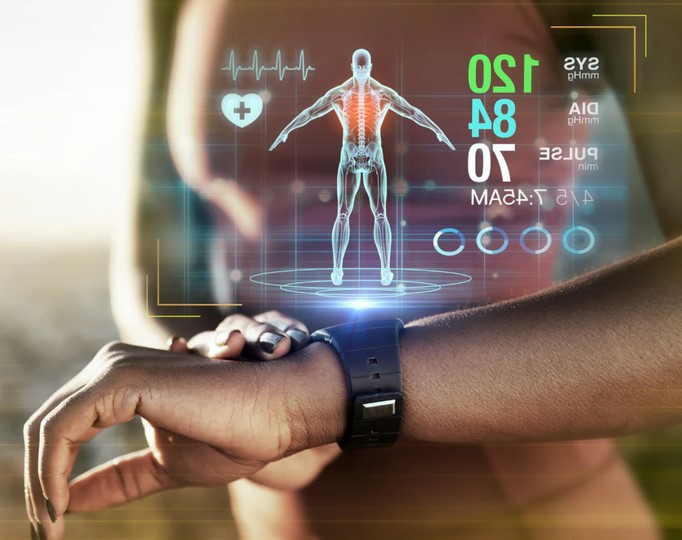
You’ve been “active” all day—running errands, pacing during phone calls, and cleaning the house—yet you feel like your fitness hasn’t budged an inch. Or perhaps you’ve just finished a workout that felt like a mountain climb, only to wonder if you actually pushed your heart hard enough to make a difference.
In my ten years of tracking health trends and testing wearable tech, I’ve seen a common thread: human beings are notoriously bad at estimating their own physical exertion. We often overestimate how much we move and underestimate how much we sit.
This is where fitness trackers come in. These sleek bands aren’t just fashion statements; they are tiny, high-tech mirrors reflecting our true biological habits back at us. In this deep dive, I’ll share how to turn that data into a roadmap for a healthier you.
The “Digital Coach” on Your Wrist
When I strapped on my first basic pedometer a decade ago, it felt like a novelty. Today, the landscape has shifted from simple step counting to complex biometric analysis.
In my experience, the real magic of fitness trackers isn’t in the numbers themselves, but in the behavioral psychology they trigger. I’ve observed that the moment a person starts seeing their daily movement quantified, their subconscious “game-mode” kicks in. You start taking the stairs instead of the elevator, not because you’re a professional athlete, but because you want to see that progress bar move.
The “Dashboard” Analogy
Think of your body like a high-performance car. Most of us drive through life with a dark dashboard—no fuel gauge, no speedometer, and no check-engine light. Fitness trackers act as that dashboard. They don’t drive the car for you, but they tell you exactly when you’re redlining or when you’ve been idling at a red light for too long.
Decoding the Metrics: What Actually Matters?
For beginners, the sheer amount of data can be overwhelming. Let’s break down the technical LSI (Latent Semantic Indexing) terms you’ll see in your app and what they actually mean for your health.
1. Heart Rate Variability (HRV)
This is a “pro-level” metric that is now available to everyone. HRV measures the variation in time between each heartbeat.
-
High HRV: Your nervous system is balanced and ready for a tough workout.
-
Low HRV: You are likely stressed or overtrained.
I always tell my clients: if your tracker shows a plummeting HRV, that’s your body’s way of asking for a rest day, regardless of what your training schedule says.
2. SpO2 (Blood Oxygen Saturation)
Many modern fitness trackers now include pulse oximetry. While not a substitute for medical-grade equipment, it monitors how well your blood is carrying oxygen. This is particularly insightful for detecting potential issues like sleep apnea or seeing how your body adapts to higher altitudes during travel.
3. Active Zone Minutes (AZM)
Steps are great, but intensity is what changes your cardiovascular health. AZM tracks time spent in fat-burn, cardio, or peak heart rate zones. It’s the difference between a leisurely stroll and a brisk walk that gets you slightly out of breath.
Beyond the Step Count: Sleep and Recovery
One of the biggest insights I’ve gained in a decade of health writing is that fitness isn’t built in the gym; it’s built in your sleep.
Modern fitness trackers use accelerometers and optical heart rate sensors to track your sleep stages: Light, Deep, and REM.
-
Deep Sleep is for physical repair (the “body shop”).
-
REM Sleep is for cognitive processing (the “hard drive backup”).
By tracking these, you can identify “sleep saboteurs.” I discovered, through my own tracker, that even one glass of wine late at night completely destroyed my Deep Sleep for the first four hours of the night. That’s an insight no “internet summary” could have given me—it was my own data talking.
Expert Advice: Getting the Most Out of Your Tech
If you want to move from a beginner to an intermediate user, you have to look past the “10,000 steps” myth.
💡 Pro Tip: The “Baseline” Strategy
Don’t aim for the industry standard on day one. For the first week, don’t change your habits at all. Just wear the tracker. Once you have your Average Baseline, aim to increase it by just 10% per week. This “Micro-Progress” prevents the burnout and injury that usually happens when people try to do too much, too soon.
⚠️ The “Accuracy” Trap
No consumer-grade fitness tracker is 100% accurate. They can be off by 10-15% on calorie burn or step count. Do not obsess over the exact number. Instead, focus on the Trend Line. If the tracker says you moved more today than yesterday, you’re winning—even if the exact step count is slightly off.
How Fitness Trackers Support Weight Loss and Metabolic Health
For those aiming for weight management, fitness trackers provide a window into your TDEE (Total Daily Energy Expenditure).
-
BMR (Basal Metabolic Rate): The calories you burn just staying alive.
-
NEAT (Non-Exercise Activity Thermogenesis): The calories burned through fidgeting, walking to the car, and standing.
-
EAT (Exercise Activity Thermogenesis): The calories burned during intentional workouts.
I’ve found that NEAT is often the “secret weapon” of fitness. A tracker helps you realize that a 30-minute gym session doesn’t “cancel out” 10 hours of sitting. It encourages you to stay active throughout the entire day, which keeps your metabolism humming.
Choosing the Right Device for Your Journey
The “best” device depends on your specific goals. Here is a quick breakdown for different levels:
-
For the Absolute Beginner: A simple screenless band or a basic pedometer-style tracker. Focus: Steps and Sleep.
-
For the Fitness Enthusiast: A mid-range smartwatch with GPS and heart rate zones. Focus: Workout Intensity and Cardio Fitness Scores.
-
For the Data Junkie: High-end sports watches or recovery-focused rings. Focus: HRV, Strain Scores, and Advanced Running Dynamics.
The Psychological Edge: Community and Accountability
We are social creatures. Most fitness trackers have social platforms where you can join challenges with friends or family.
In my professional opinion, this “Gamification” is one of the most powerful tools for long-term adherence. When you know your sibling can see that you haven’t hit your goal yet, you’re much more likely to go for that evening walk. It turns a solitary struggle into a shared journey.
Conclusion: Data is Only Power if You Use It
At the end of the day, fitness trackers are tools, not magic wands. They provide the map, but you still have to walk the path.
The true value of these devices lies in their ability to make the invisible, visible. They show you the link between your habits and your health, empowering you to make small, informed decisions that lead to massive long-term results.
I’ve seen thousands of people use this tech to reclaim their health, and I truly believe that once you start measuring what matters, you start changing what matters.
Are you currently using a tracker, or are you thinking about getting your first one? What is the one metric you’re most curious about—is it your steps, your sleep, or your stress levels? Let me know in the comments below, and let’s discuss how to make your data work for you!