Behavioral Addiction Treatment: Approaches to Overcoming Addictive Behaviors
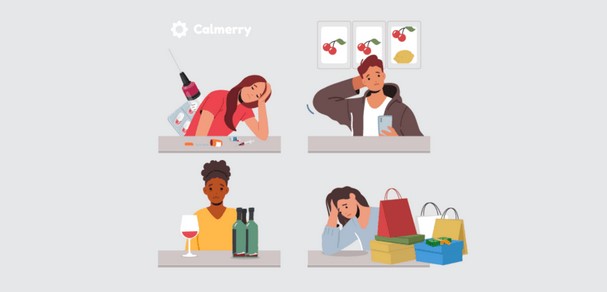
It starts as a harmless scroll through a smartphone at 11:00 PM. Before you know it, the birds are chirping, the sun is rising, and you’ve spent five hours chasing a “digital high” that leaves you feeling more empty than when you started. Whether it’s compulsive gaming, obsessive shopping, or the endless loop of social media validation, the brain doesn’t distinguish between a chemical substance and a rewarding behavior.
In my decade of writing for the health sector and working alongside recovery specialists, I’ve seen a seismic shift in our understanding of “addiction.” We used to think you needed a syringe or a bottle to be addicted. Today, we know that a behavior can rewire your neural pathways just as aggressively as any drug.
The good news? The same brain plasticity that allowed the addiction to take root is also the key to your freedom. In this deep dive, we’re going to explore the modern landscape of behavioral addiction treatment and how to break the cycle for good.
The “Invisible Hand” of Behavioral Addiction
I remember sitting in a clinical observation room years ago, watching a patient describe their “need” to check stock market tickers every 30 seconds. To an outsider, it looked like a hobby gone wrong. To the patient, it felt like oxygen.
This is the hallmark of a behavioral addiction: loss of control despite negative consequences. You aren’t doing it because it’s fun anymore; you’re doing it to stop the “itch” of anxiety.
The “Thermostat” Analogy
Think of your brain’s dopamine system like a home thermostat. In a healthy brain, the temperature stays steady. When you engage in an addictive behavior, it’s like blowing a heat gun directly at the thermostat. The system panics and tries to compensate by turning the “cooling” way up.
Eventually, your brain’s baseline temperature drops so low that you can no longer feel “warm” (happy) from normal things like a sunset or a good meal. You need the heat gun (the behavior) just to feel “normal.” Behavioral addiction treatment is essentially the process of recalibrating that thermostat.
Core Pillars of Behavioral Addiction Treatment
Overcoming these behaviors requires more than just “willpower.” It requires a multi-pronged clinical approach that addresses the brain, the environment, and the spirit.
1. Cognitive Behavioral Therapy (CBT)
CBT remains the gold standard. It focuses on identifying the “triggers”—the specific thoughts or situations that lead to the behavior. If you can catch the thought “I’ve had a bad day, I deserve to gamble,” you can redirect the neural impulse before it becomes an action.
2. Dialectical Behavior Therapy (DBT)
Originally developed for personality disorders, DBT is incredibly effective for behavioral addictions because it teaches Distress Tolerance. It helps patients sit with the discomfort of an “urge” without acting on it. It’s like learning to surf: you can’t stop the waves (the urges), but you can learn how to balance on the board until the wave passes.
3. Motivational Interviewing (MI)
This is a clinical technique I’ve seen work wonders for those who are “on the fence” about quitting. Instead of a therapist telling you what to do, they help you discover your own internal reasons for change. It moves the motivation from “I have to” to “I want to.”
The Technical Side: Neuroplasticity and Recovery
When we talk about behavioral addiction treatment, we are talking about neurogenesis—the growth of new neurons—and the pruning of old, addictive pathways.
-
Dopamine Downregulation: This is the technical term for when your brain reduces its number of receptors because it’s being overwhelmed. Recovery is the slow process of “upregulating” those receptors so you can enjoy life again.
-
Prefrontal Cortex Strengthening: Addictive behaviors weaken the part of your brain responsible for executive function (the “adult” in the room). Treatment helps “re-muscle” this area through mindfulness and delayed gratification exercises.
Modern Challenges: The “Always-On” Era
In the past, a gambling addict had to physically go to a casino. Today, the casino is in their pocket. This makes behavioral addiction treatment unique because abstinence isn’t always possible.
You can’t “quit” the internet or “quit” using your phone in 2026. This is where we move from an abstinence model to a Harm Reduction or Moderation Management model. We aren’t trying to live in a cave; we are trying to build a healthy relationship with the tools of modern life.
Expert Advice: Tools for the Journey
To move from a beginner to an intermediate level of recovery, you need practical “boots-on-the-ground” strategies.
💡 Pro Tip: The “15-Minute Rule”
An urge, no matter how intense, usually peaks and fades within 15 minutes. When the “itch” to engage in your addictive behavior hits, set a timer for 15 minutes. Tell yourself: “I can do it after the timer, but for these 15 minutes, I will do something else (walk, drink water, breathe).” In 90% of cases, the intensity of the urge will have subsided by the time the bell rings.
⚠️ The “Transfer” Trap
Be extremely careful of cross-addiction. I have seen countless individuals quit a shopping addiction only to find themselves obsessively exercising or overeating. You are swapping one “heat gun” for another. True behavioral addiction treatment addresses the underlying void, not just the specific habit.
The Role of Support Systems
In my experience, “Isolation is the greenhouse of addiction.” Addictive behaviors thrive in secrecy.
-
Support Groups: Programs like Gamblers Anonymous (GA) or Sex and Love Addicts Anonymous (SLAA) provide a community of people who “speak the language.”
-
Family Therapy: Often, the family dynamic unconsciously “enables” the behavior. Treating the family unit is just as important as treating the individual.
-
Digital Detox Hubs: Some modern clinics now offer “unplugged” retreats specifically designed to reset the dopamine system away from screens and stimulation.
Practical Steps to Start Your Recovery Today
If you feel like a behavior is starting to run your life, don’t wait for a “rock bottom.” Start here:
-
Track the Data: For one week, log every time you engage in the behavior and what you were feeling right before. Was it boredom? Stress? Loneliness?
-
Create “Friction”: If you shop too much, delete your saved credit card info. If you game too much, put the console in a difficult-to-reach closet. Make the “bad” habit harder to do.
-
Schedule “Analog” Time: Dedicate at least two hours a day to activities that involve zero screens and zero high-stimulation inputs—gardening, reading physical books, or manual labor.
Conclusion: Reclaiming Your Narrative
Recovery from a behavioral addiction isn’t about losing something; it’s about gaining your life back. It’s about the freedom to choose your actions instead of being a passenger in your own brain.
As a health writer who has seen the dark side of these “silent addictions,” I can tell you that the path to recovery is rarely a straight line. There will be slips. There will be days when the “thermostat” feels broken. But with the right behavioral addiction treatment plan, you can rewire your brain for peace.
Which behavior in your life feels like it’s starting to take the steering wheel? Is it the phone, the spending, or something else? Let’s talk about it in the comments below—naming the “invisible hand” is the first step to breaking its grip.