Environmental Health Assessments: Why They Matter for Your Well-Being
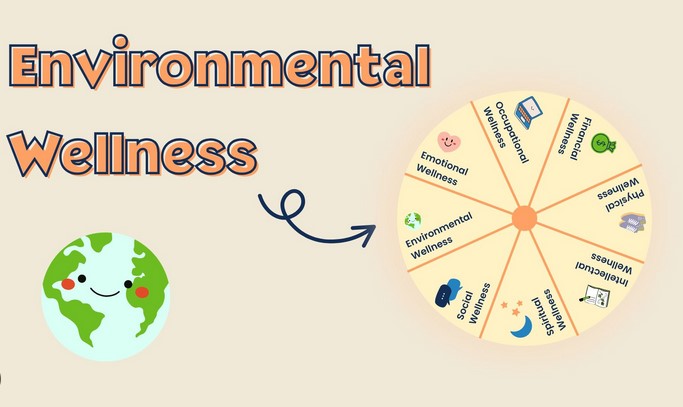
Imagine waking up every morning with a nagging headache, a dry cough, or a strange skin rash that simply won’t go away. You’ve changed your diet, you’re sleeping eight hours a night, and your blood work comes back “normal.” Yet, you feel like your body is under a low-grade siege. According to the World Health Organization, nearly 25% of all global deaths are linked to environmental risks—factors like air quality, chemical exposure, and soil contamination that we often breathe in or touch without a second thought.
In my ten years navigating the complexities of public health, I’ve sat in living rooms where families were unknowingly breathing in off-gassed formaldehyde from new “eco-friendly” flooring. I’ve seen office workers struggling with chronic fatigue, only to find the building’s ventilation system was a breeding ground for hidden particulates. The “insight” I’ve gained is this: You cannot be truly healthy in a sick environment.
Environmental Health Assessments are the diagnostic tools we use to find the “invisible villains” in your surroundings before they become permanent residents in your biology.
1. What Exactly is an Environmental Health Assessment?
Think of your body like a high-end smartphone. You can have the best apps (diet) and the fastest processor (exercise), but if you try to charge it with a faulty, sparking outlet (your environment), the battery will eventually fry.
An assessment is essentially a deep-dive “electrical check” of your surroundings. It evaluates the physical, chemical, and biological factors that could impact your health. It moves beyond just looking at “pollution” in a general sense and zooms in on the specific micro-environments where you spend 90% of your time: your home and your workplace.
The Three Pillars of Assessment
-
Identification: Pinpointing potential hazards (e.g., lead, mold, or radon).
-
Dose-Response: Determining how much exposure is actually harmful.
-
Risk Characterization: Predicting how these factors will affect your specific health profile.
2. The Invisible Threats: Why You Need to Look Deeper
Most people assume that if they can’t smell it or see it, it isn’t there. Unfortunately, the most dangerous environmental stressors are often odorless and colorless. This is where Environmental Health Assessments prove their worth.
Indoor Air Quality (IAQ) and VOCs
We often worry about smog outside, but indoor air can be 2 to 5 times more polluted than outdoor air. Volatile Organic Compounds (VOCs) are chemicals found in everything from your “fresh scent” laundry detergent to the glue in your office desk. Over time, these can trigger Endocrine Disruption, interfering with your hormones and metabolism.
The Silent Danger of Heavy Metals
I once worked with a client who had unexplained neurological tremors. It wasn’t until a soil and water assessment was conducted that we found high levels of lead leaching from old pipes that had been partially replaced. Without a formal assessment, they might have spent years on the wrong medication.
Biological Contaminants
Mold is the obvious culprit here, but assessments also look for endotoxins and allergens produced by pests or poorly maintained HVAC systems. These biological agents can keep your immune system in a state of “high alert,” leading to systemic inflammation.
3. How a Professional Assessment Works
When we conduct Environmental Health Assessments, we don’t just walk around with a clipboard. We use technical instrumentation to quantify the invisible.
Phase I: The Site Reconnaissance
This involves a historical review of the property. Was your apartment complex built on an old industrial site? Is the plumbing from an era where lead solder was common? We look for the “biography” of the building.
Phase II: Sampling and Analysis
This is the “data” stage. Experts collect samples of:
-
Ambient Air: Testing for particulate matter ($PM_{2.5}$ and $PM_{10}$).
-
Potable Water: Checking for nitrates, bacteria, and heavy metals.
-
Surface Swabs: Identifying specific fungal or bacterial strains.
Phase III: The Remediation Roadmap
An assessment is useless if it doesn’t give you a solution. This phase provides a prioritized list of actions—whether it’s installing a HEPA-grade filtration system, replacing certain building materials, or professional mold remediation.
4. The “Healthy Building” Revolution
In the intermediate stages of understanding environmental health, we look at the concept of Bio-Sustenance. This is the idea that our buildings should actively support our biology rather than just “not killing us.”
Environmental Health Assessments are now being used to optimize:
-
Circadian Lighting: Ensuring indoor light mimics natural sun patterns to support sleep.
-
Ergonomics and Sound: Reducing “noise pollution” that spikes cortisol levels.
-
Biophilic Design: Integrating natural elements to lower heart rates and improve mental clarity.
5. Expert Advice: Pro Tips and Hidden Warnings
Through years of practical experience, I’ve learned that the biggest mistakes happen when people try to “DIY” their environmental health.
Pro Tip: Beware of “Greenwashing”
Just because a product says “Natural” or “Eco-friendly” doesn’t mean it passes a health assessment. Always look for Third-Party Certifications like Greenguard Gold or OEKO-TEX. These labels mean the product has been tested for chemical emissions in a lab.
Hidden Warning: The “Air Purifier” Trap
Many people buy an expensive air purifier and think they are safe. However, if you have a source of mold or a gas leak, a purifier is like trying to bail water out of a sinking boat with a spoon. You must remove the source first. An assessment identifies the source; the purifier is just the finishing touch.
6. LSI Keywords and Technical Vocabulary
Understanding these terms will help you communicate better with health professionals:
-
Toxicology: The study of the adverse effects of chemical substances on living organisms.
-
Epidemiology: The branch of medicine that deals with the incidence and distribution of diseases.
-
Radon Gas: A naturally occurring radioactive gas that can cause lung cancer.
-
Pathogens: Bacterium, virus, or other microorganism that can cause disease.
-
Bioaccumulation: The gradual accumulation of substances, such as pesticides, or other chemicals in an organism.
7. Taking Control of Your Micro-Environment
You don’t need to wait for a crisis to start an assessment. Here is a simple “Mini-Assessment” you can do today:
-
Check Your Humidity: Keep indoor humidity between 30% and 50%. Anything higher invites mold; anything lower dries out your mucous membranes (your first line of defense against viruses).
-
The “Nose Test”: If a room has a persistent “musty” or “metallic” smell, don’t mask it with candles. That smell is a chemical signal that something is wrong.
-
Water Filter Audit: Check if your current filter removes PFAS (forever chemicals) and lead. Most basic pitcher filters do not.
Conclusion: Investing in Your Surroundings
Your health is a reflection of your environment. We often spend thousands on supplements and gym memberships while ignoring the very air we breathe and the water we drink. By prioritizing Environmental Health Assessments, you are taking a proactive, scientific approach to longevity.
Remember: You aren’t just an inhabitant of your home; your cells are “eating” the environment you provide for them. Make sure it’s a gourmet meal, not toxic waste.
Have you ever suspected that something in your home or office was making you feel unwell? Share your story or ask a question in the comments below—I’d love to help you navigate the “invisible” side of your wellness journey!