Heart Rate Monitor Benefits: Tracking Your Fitness Progress
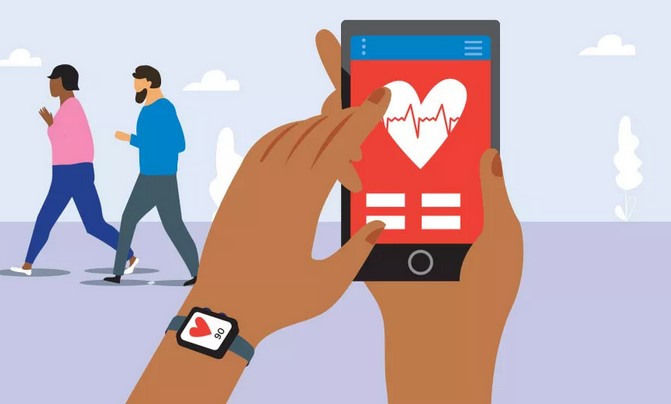
You’re twenty minutes into your run. Your lungs are burning, your face is beet-red, and you’re convinced you’re working at 110% capacity. But then you glance at your wrist, and the numbers tell a different story: your heart rate is barely touching the “Aerobic” zone. Or, perhaps more dangerously, you feel “fine” while your heart is actually red-lining at a pace that is completely unsustainable for your current fitness level.
In my decade of coaching and health writing, I’ve seen this “Effort Paradox” break more spirits than actual injuries. We are notoriously bad at judging our own intensity. Without data, we are just guessing—and in the world of cardiovascular health, guessing is the fastest way to plateau or burn out.
Understanding Heart Rate Monitor benefits isn’t just for elite marathoners or gadget geeks. It is the single most effective way for beginners and intermediates to turn “working out” into “training.”
1. The Dashboard of Your Body: Why Data Matters
Think of a heart rate monitor (HRM) as the dashboard in your car. You could drive without a speedometer or a fuel gauge, but you’d likely end up with a speeding ticket or stranded on the side of the road.
Your heart rate is the most honest indicator of how your internal systems are responding to external stress. Whether you are using a chest strap (the gold standard for accuracy) or an optical wrist sensor (the king of convenience), you are gaining access to real-time feedback that your “perceived exertion” simply cannot provide.
I’ve personally consulted with clients who were “doing everything right” but weren’t losing weight or getting faster. Once we strapped on a monitor, we realized they were stuck in the “Black Hole of Training”—working too hard to recover, but too easy to trigger a real fitness adaptation.
2. Maximizing Your Training with Heart Rate Monitor Benefits
When you start tracking, you move from vague goals to surgical precision. Here are the core ways an HRM transforms your progress:
Precise Zone Training
Most people spend 90% of their time in Zone 3, which is “moderately hard.” It feels like work, but it’s not the most efficient for burning fat or building top-end speed.
-
Zone 2 (The Fat-Burning Engine): By staying in a lower heart rate zone, you teach your body to utilize fat as a primary fuel source.
-
Zone 4/5 (The Performance Peak): This is where you build “VO2 Max” and anaerobic threshold.
Preventing Overtraining and Burnout
This is a benefit people often overlook. If your Resting Heart Rate (RHR) is 10 beats higher than usual on a Tuesday morning, it’s a signal from your nervous system that you haven’t recovered from Monday’s session. I’ve used this data to tell athletes to take a nap instead of hitting the gym—a decision that prevents injury and long-term fatigue.
Measuring Cardiovascular Efficiency
Over time, you’ll notice a “magic” shift. You’ll be running at the same speed as you did last month, but your heart rate will be 5–10 beats lower. This is the objective proof that your heart has become a more powerful pump and your mitochondria are more efficient.
3. Decoding the Metrics: Technical Terms You Should Know
To get the most out of your device, you need to speak the language. Here are the key LSI keywords and concepts used in clinical health tracking:
-
Max Heart Rate (MHR): The highest number of beats per minute (BPM) your heart can safely reach. (Common formula: $220 – \text{age}$, though this is a rough estimate).
-
Heart Rate Variability (HRV): The variation in time between each heartbeat. A high HRV usually indicates a well-rested, resilient nervous system.
-
Recovery Heart Rate: How quickly your BPM drops in the two minutes after stopping exercise. This is a massive indicator of overall cardiac health.
-
Aerobic Threshold: The point where your body moves from using mostly oxygen for fuel to using more glycogen (sugars).
4. Chest Straps vs. Wrist Sensors: Which is Right for You?
In my experience, the “best” monitor is the one you will actually wear. however, they are not created equal.
-
Optical Wrist Sensors (Smartwatches): These use light (photoplethysmography) to measure blood flow. They are excellent for 24/7 lifestyle tracking and steady-state cardio (like walking or slow jogging).
-
Chest Straps (EKG-style): These measure the actual electrical activity of the heart. If you are doing HIIT (High-Intensity Interval Training) or heavy lifting, a chest strap is mandatory. Wrist sensors often “lag” during rapid heart rate changes, giving you inaccurate data during the most intense parts of your workout.
5. Expert Advice: Pro Tips and Hidden Warnings
After a decade of looking at heart rate graphs, here is what the manuals don’t tell you:
Pro Tip: The “Cardiac Drift” Phenomenon
On a hot day, your heart rate will slowly climb even if you don’t speed up. This is called Cardiac Drift. Your heart has to work harder to pump blood to the skin for cooling. If you see your BPM rising but you feel okay, don’t panic—just hydrate.
Hidden Warning: Don’t Become a Slave to the Number
Data is a tool, not a master. If your watch says you are “Strained” but you feel like a superhero, trust your body occasionally. Factors like caffeine, stress, and even a large meal can artificially inflate your heart rate by 10–15 beats without reflecting your actual fitness level.
6. How to Start Tracking Your Progress Today
If you are a beginner, don’t get bogged down in complex spreadsheets. Follow this simple 3-step roadmap:
-
Find Your Baseline: Wear your monitor for three consecutive mornings before you get out of bed to find your true Resting Heart Rate.
-
Test Your Zones: Perform a “Talk Test.” If you can speak in full sentences, you’re likely in Zone 2. Note what your BPM is at that moment. That is your “Aerobic Base” number.
-
Monitor Trends, Not Days: Don’t obsess over one “bad” workout. Look at your weekly averages. Is your resting heart rate trending down over the month? Is your pace at a specific BPM getting faster? That is where the real victory lies.
7. The Psychological Boost of Visible Progress
There is a profound mental shift that happens when you see your progress quantified. Fitness can often feel invisible—weight loss is slow, and muscles take time to grow. But seeing a Heart Rate Recovery score improve by 5% in a single month provides the dopamine hit needed to stay consistent.
Consistent tracking turns the “black box” of your body into a transparent, manageable system. It replaces anxiety with evidence.
Conclusion: Take the Pulse of Your Fitness Journey
The true power of Heart Rate Monitor benefits lies in the bridge they build between your mind and your body. By listening to the electrical signals of your heart, you stop fighting against your physiology and start working with it. Whether you’re trying to lose your first 10 pounds or shave 10 minutes off your 10k, your heart has the answers.
What’s your experience with fitness trackers? Do you find the data motivating, or have you struggled to make sense of the zones? Drop a comment below—I’d love to help you decode your numbers!