Meal Prep for Beginners: How to Plan and Prepare Healthy Meals
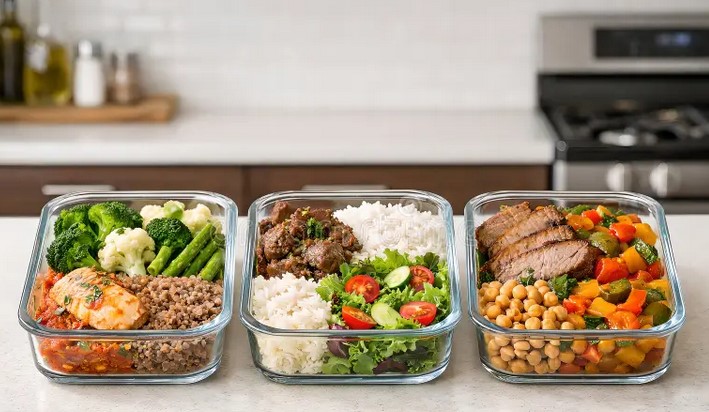
It’s 6:30 PM on a Tuesday. You just finished a grueling shift, your energy levels are hitting zero, and the “What’s for dinner?” question starts looping in your head like a broken record.
You open the fridge to find a wilted head of lettuce and a jar of pickles. Five minutes later, you’re scrolling through a delivery app, spending $30 on a “healthy” bowl that’s actually loaded with hidden sodium and inflammatory seed oils.
In my ten years of health writing and consulting, I’ve realized that the greatest obstacle to wellness isn’t a lack of willpower—it’s a lack of a system. Today, we’re breaking that cycle. This is the definitive guide to meal prep for beginners, designed to turn your kitchen from a stress zone into a high-efficiency health hub.
The “Sunday Scaries” vs. The Meal Prep Strategy
When I first started in this field, I thought meal prepping meant spending eight hours every Sunday standing over a hot stove, portioning out bland chicken and broccoli into 21 identical plastic containers. I hated it. It felt like a second job, and by Wednesday, the food tasted like cardboard.
Then I discovered Component Prepping. Instead of making full meals, I started prepping building blocks.
Think of your meals like LEGO sets. If you have the individual bricks ready—a bowl of roasted sweet potatoes, a container of seasoned quinoa, and some grilled protein—you can build a different “set” every night in under five minutes. This realization changed my life, and it’s the secret sauce I share with anyone struggling to stay consistent.
Phase 1: Mastering the Blueprint of Meal Prep for Beginners
Before you chop a single onion, you need a plan. Walking into a grocery store without a list is like going into a forest without a map; you’re going to get lost, and you’re probably going to buy things you don’t need.
1. Audit Your Inventory
Check your pantry and freezer first. Most of us have “zombie ingredients”—that bag of lentils or frozen spinach—that have been sitting there for months. Build your first few meals around these to save money and reduce waste.
2. The “Rule of Three”
For those just starting with meal prep for beginners, don’t try to prep 15 different recipes. Pick three proteins, three complex carbohydrates, and three different vegetables.
-
Proteins: Chicken breast, tofu, hard-boiled eggs, or chickpeas.
-
Carbs: Brown rice, sweet potatoes, or whole-wheat pasta.
-
Veggies: Roasted broccoli, sautéed bell peppers, or fresh kale.
3. Choose Your Prep Style
-
Full Batch Cooking: Best for soups, stews, and casseroles.
-
Buffet Style (Component Prep): Prepping individual ingredients to mix and match.
-
Pre-Portioned Meals: The classic “Grab-and-Go” containers for busy office workers.
Phase 2: The Tactical Execution in the Kitchen
Now, let’s get into the technicalities. Efficiency in the kitchen is about Parallel Processing. While your sweet potatoes are roasting for 40 minutes, you should be simmering your grains and chopping your raw greens simultaneously.
Essential Gear for Success
You don’t need a professional kitchen, but high-quality airtight containers are non-negotiable. I personally recommend glass containers (borosilicate glass) because they don’t leach chemicals like BPA into your food when reheated and they keep produce crisp for much longer than plastic.
Maximizing Flavor Without the Calories
One “insider” secret I’ve learned from professional chefs is the power of acid and aromatics. Beginners often over-rely on heavy sauces. Instead, use:
-
Lemon/Lime juice: Brightens up heavy proteins.
-
Vinegars: Apple cider or balsamic adds depth.
-
Fresh herbs: Parsley, cilantro, or basil added after reheating make a “prepped” meal taste freshly cooked.
Phase 3: Solving the “Soggy Salad” Syndrome
One of the biggest complaints I hear from beginners is that prepped food gets “gross” by Thursday. This usually comes down to moisture management and food safety.
Proper Storage Hierarchy
-
The Bottom Shelf: Keep your prepped proteins here (it’s the coldest part of the fridge).
-
The Crisper Drawer: Keep your washed and dried leafy greens wrapped in a paper towel to absorb excess moisture.
-
The Freezer: If you aren’t going to eat a meal within 4 days, freeze it immediately.
💡 Pro Tip: The “Mason Jar” Hack
When prepping salads for the week, put the dressing at the very bottom of the jar. Layer your hard veggies (carrots, cucumbers) next, then your grains/proteins, and put the leafy greens at the very top. This keeps the leaves away from the liquid, ensuring a crunch even on day four.
The Nutritional Science of Reheating
As a health writer, I have to touch on the technical side of nutrient density. Some vitamins (like Vitamin C) are heat-sensitive and will degrade slightly during reheating.
However, don’t let “perfect” be the enemy of “good.” A slightly less vitamin-rich home-cooked meal is infinitely better for your gut microbiome and metabolic health than a processed fast-food burger loaded with trans fats.
LSI Context: Macronutrient Balance
When assembling your prepped bowls, aim for the Plate Method:
-
50% Non-starchy vegetables: (Fiber and micronutrients)
-
25% Lean protein: (Muscle repair and satiety)
-
25% Complex carbohydrates: (Sustained energy/low-glycemic index)
-
1 Thumb-sized portion of Healthy Fats: (Hormone health and nutrient absorption)
Overcoming the “Boredom” Wall
By week three of meal prep for beginners, many people quit because they are tired of eating the same thing. This is where “Sauce Variation” comes in.
I keep a “flavor station” in my fridge. I can take the same base of chicken and rice and turn it into:
-
Mediterranean: Add feta, olives, and tzatziki.
-
Mexican: Add salsa, avocado, and cumin.
-
Asian-Inspired: Add a splash of tamari, ginger, and sesame oil.
It’s the same “LEGO bricks,” just a different “instruction manual” every night.
The Danger of “The Prep Trap”
I see this all the time with high-achievers: they spend $200 on groceries, spend all Sunday cooking, and then life happens. A late meeting or an impromptu dinner with friends results in half that food going into the trash by Friday.
My Expert Advice: Start small. You don’t have to prep 21 meals. Start by prepping just your lunches for Monday through Thursday. See how that feels. Once that habit is “cemented” into your routine, move on to breakfasts or dinners.
Conclusion: Take Back Your Time
Meal prepping isn’t about being “perfect” or having an Instagram-worthy fridge. It’s an act of self-care. It’s a gift you give to your “future self” so that when Tuesday at 6:30 PM rolls around, you can actually relax instead of stressing over a frying pan.
In the world of health, consistency beats intensity every single time. A basic plan followed 80% of the time is better than a perfect plan that you abandon after one week.
Which part of your day is the most stressful when it comes to food? Are you a breakfast-skipper or a late-night-orderer? Let me know in the comments, and let’s figure out your first prep-step together!